
How to play Speed Roulette — rules for beginners
Ontdek de opwinding van Vegas Hero Casino NL
April 22, 2026Νέες ιρλανδικές κουλοχέρηδες 2026 — κυκλοφορίες
May 2, 2026How to play Speed Roulette — rules for beginners
Speed Roulette compresses a standard roulette cycle into a faster commercial product, and that speed changes the math of every round. A typical live wheel spin can take close to a minute from betting close to result settlement, while Speed Roulette trims that waiting time sharply, which raises the number of decisions per hour and, by extension, the operator’s turnover potential and GGR cadence.
For a beginner, the core task is simple: place a wager before the betting window closes, then watch the wheel resolve one number. For a player resource with room to compare table-game formats and study operator conditions, see (player resource) as a reference point rather than a shortcut.
In revenue terms, the game belongs to the high-frequency end of live casino inventory. Faster rounds can increase handle volume even when average stake size stays small, because more rounds create more exposure to the house edge. The basic rule set still follows roulette logic, but the pace changes the expected value distribution across an hour of play.
What changes when the wheel moves faster
Standard European roulette usually gives the house a 2.70% edge, based on 1 zero on a 37-pocket wheel. If a player stakes $10 per spin, the long-run expected loss is about $0.27 per spin. At 40 spins, expected loss becomes $10.80; at 60 spins, it rises to $16.20. Speed Roulette does not alter that edge by itself, but it can multiply the number of settled bets within the same time block.
That pace is the real product feature. If a live table settles 70 spins per hour instead of 35, the theoretical player exposure doubles. The operator’s GGR opportunity does the same, assuming the same average stake and bet mix. A beginner should think in hourly terms, not only per-spin terms.
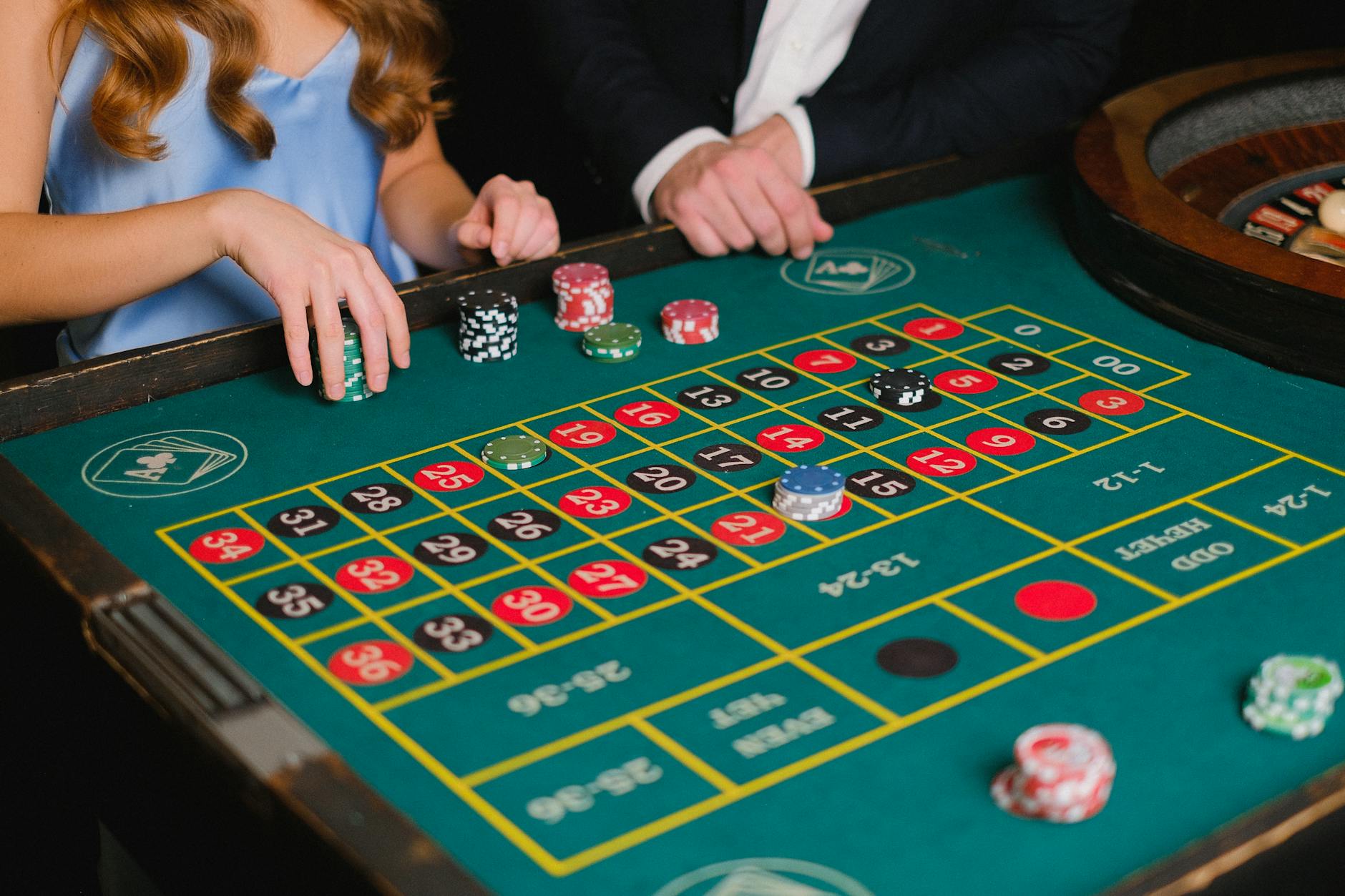
Speed also reduces downtime between decisions. That can help disciplined players, but it punishes hesitation. A late bet is simply rejected, and a rushed bet often lands on the wrong side of probability. The game rewards pre-planning more than improvisation.
How the betting window works in numbers
Most Speed Roulette tables use a short betting timer, often around 10 to 15 seconds. If the timer is 12 seconds and the dealer completes 5 rounds per minute, that produces 300 betting opportunities per hour in theory, though practical live-play conditions usually lower that figure because of result animation and camera transitions. Even so, the cycle remains far denser than classic live roulette.
To understand the timing, imagine a 12-second betting phase and an 8-second result phase. One full cycle is 20 seconds. Divide 3,600 seconds by 20, and you get 180 cycles per hour. If only 60% of those cycles are actually available for betting due to dealer handoffs or table resets, the usable rate falls to 108 rounds per hour. That is still high-volume table action.
- Betting window: 10-15 seconds
- Result cycle: often 5-10 seconds
- Practical hourly round count: roughly 90-180
- House edge on European roulette: 2.70%
For beginners, the key takeaway is that a shorter timer demands simpler bet selection. Complex systems look appealing until the clock forces errors. A single straight-up number bet and a few outside bets are easier to manage under pressure than a long, layered spread.
Which bets are easiest for a beginner to read
The math of roulette bets is not equal, and Speed Roulette makes that difference more visible. Straight-up number bets pay 35:1, but the hit rate is 1 in 37 on a European wheel, or 2.70% per spin. Even-money bets such as red/black, odd/even, or high/low cover 18 numbers out of 37, which is 48.65% before the zero is counted against the player.
| Bet type | Coverage | Payout | Simple math for a $10 stake |
|---|---|---|---|
| Straight-up | 1 of 37 | 35:1 | Win = $350 profit; loss on most spins = $10 |
| Even-money | 18 of 37 | 1:1 | Win = $10 profit; loss = $10 |
| Dozen / column | 12 of 37 | 2:1 | Win = $20 profit; loss = $10 |
For a beginner, even-money bets are the cleanest reading exercise. If you place $10 on red, your result is either +$10 or -$10, with the zero creating the house edge. On a European wheel, the theoretical return to player is 97.30%, which means the expected loss is $0.27 per $10 spin over a very large sample.
Hacksaw Gaming is better known for slots than live roulette, but the provider comparison matters because studios shape the broader casino menu, and the operator’s catalogue often determines whether a beginner lands on a classic wheel, a speed variant, or a hybrid table with extra side bets.
How the zero changes the expected loss
The zero is the entire house edge story in European roulette. With 37 numbers and only 18 red pockets, a red bet wins 18/37 of the time and loses 19/37 of the time. That extra 1 pocket is the operator’s margin. In percentage terms, the house edge is 1/37, or 2.70%. On a $25 wager, expected loss is $0.675 per spin.
In a faster format, the arithmetic compounds through volume. Suppose a beginner stakes $25 on 50 spins in one session. The total turnover is $1,250. Multiply by 2.70%, and the long-run expected loss is $33.75. If the same player stretches to 100 spins because the table moves quickly, the expected loss doubles to $67.50.
A practical way to read the wheel: every extra spin is another 2.70% slice of exposure on a European table, and faster tables simply let that slice arrive more often.
That is why speed matters more than flair. The wheel does not become “tougher” in a mathematical sense, but the session density rises. A player who understands bankroll impact can use the format responsibly; a player who ignores round count can burn through funds much faster than expected.
A beginner session plan built from exact numbers
A sensible starter plan uses fixed stakes, a fixed stop-loss, and a round cap. For example: $5 per spin, 30-spin limit, and a $150 session bankroll. If the table runs at 100 rounds per hour, that 30-spin session can end in roughly 18 minutes if the player keeps pace. The planned theoretical loss on European roulette is $150 x 2.70% = $4.05, though actual results will vary widely.
Here is a simple calculation ladder:
- Choose one bet type: red, black, odd, even, or a single number.
- Set stake size: $5, $10, or $20, but keep it constant.
- Set a session cap: 20, 30, or 40 spins.
- Multiply total turnover by 2.70% to estimate theoretical loss.
Example: 40 spins at $10 each equals $400 turnover. The expected loss is $10.80. If the player wins early and doubles a few times, the math still stays tied to the same base edge. Speed Roulette changes the tempo, not the underlying probability structure.
That is the beginner’s rule set in one line: keep the bet simple, count the spins, and read the wheel as a sequence of small mathematical events rather than one long emotional streak.